Power Systems Built for Production Demands
Industrial Electrical Services in Decatur for manufacturing facilities, warehouses, processing plants, and operations requiring reliable power distribution
Manufacturing floors, processing lines, and warehouse operations depend on electrical systems that deliver consistent power without interruption. Apex Electrical Solutions Inc handles industrial electrical installations, equipment wiring, power distribution, controls, and system upgrades for demanding production environments in Decatur. The work includes everything from motor control centers to three-phase distribution systems that support heavy machinery and automated processes.
Industrial electrical work differs from residential or light commercial projects because equipment loads are measured in hundreds of amps rather than individual circuits, and voltage requirements often include 480V three-phase systems alongside standard 120V circuits. The wiring must account for motor starting currents, continuous duty cycles, and environments where dust, moisture, or temperature extremes affect component selection. Panel layouts are designed for future expansion so additional production lines or equipment can be added without replacing the entire distribution system.
Schedule an on-site industrial electrical consultation to evaluate current capacity and future equipment requirements.
How Preventative Maintenance Reduces Unplanned Downtime
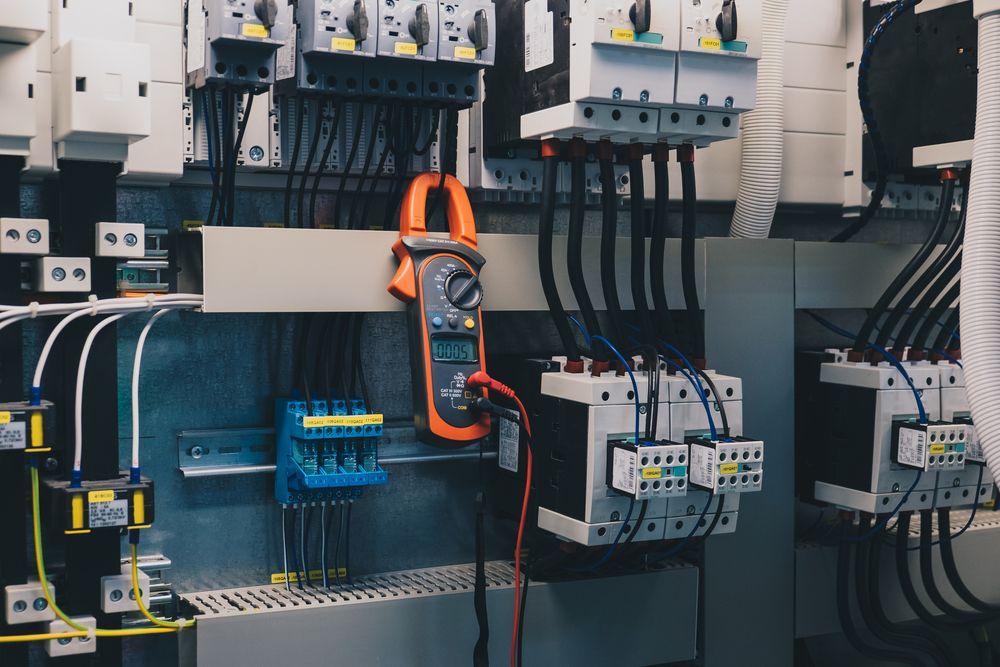
Preventative maintenance for industrial electrical systems involves thermal imaging to detect overheating connections, torque verification on breaker terminals, and insulation resistance testing on motor feeders. These diagnostics identify deteriorating components before they fail during production shifts. Loose connections develop higher resistance over time, which generates heat and eventually causes breaker trips or conductor damage. Catching these issues during scheduled maintenance means repairs happen during planned downtime rather than stopping production unexpectedly.
After electrical installations or upgrades are completed, equipment starts reliably, circuit protection devices operate within rated parameters, and distribution panels no longer show signs of overheating or overloading. Production supervisors notice fewer nuisance trips, maintenance teams spend less time troubleshooting electrical faults, and facility managers gain capacity to add equipment without immediate infrastructure changes. Apex Electrical Solutions Inc structures maintenance programs around your operational schedule to minimize impact on production flow.
Every installation follows current National Electrical Code requirements and local commercial electrical standards, with particular attention to grounding, bonding, and fault current protection in industrial settings. The work is documented with panel schedules, equipment tags, and as-built drawings that simplify future troubleshooting and expansion projects.
What Facility Managers Ask About Industrial Electrical Work
Industrial operations require electrical systems that support both current production needs and future facility changes, and most facility managers want to understand how installations are planned and completed.
What information is needed before starting an industrial electrical project?
Site evaluations include current load calculations, equipment nameplate data, future expansion plans, and utility transformer capacity. Decatur facilities often have existing infrastructure that can be integrated with new installations, which affects project scope and cost.
How are industrial electrical installations completed without stopping production?
Most work is scheduled during planned shutdowns, off-shifts, or phased over multiple weekends. Critical tie-ins are coordinated with production schedules, and temporary power provisions maintain operations when necessary.
What makes industrial electrical systems different from commercial installations?
Industrial systems handle higher voltages, larger conductor sizes, motor control circuits, and equipment rated for continuous duty cycles. Component selection accounts for environmental factors like dust, temperature extremes, and vibration that don't affect office or retail installations.
Why do electrical panels sometimes need upgrades even when production equipment hasn't changed?
Panels degrade over time due to thermal cycling, loose connections, and breaker wear. Equipment that originally fit within design capacity may now push systems closer to their limits as auxiliary equipment and automation components are added incrementally.
How does preventative maintenance affect long-term electrical system reliability?
Regular thermal imaging, connection torque checks, and insulation testing identify deteriorating components before they fail. Facilities with maintenance programs experience fewer emergency service calls and longer intervals between major equipment replacements.
Apex Electrical Solutions Inc works with facility managers, maintenance teams, and production supervisors to plan electrical projects that support operational goals while maintaining code compliance and system safety. Request an industrial electrical estimate to review specific project requirements and scheduling options for your facility.